Drilling a water well costs between $3,000 and $15,000 for most residential properties in the United States, though that range tells only part of the story. A shallow well in sandy soil in Mississippi might run $4,500 start to finish. That same project on a granite-heavy lot in Rhode Island could land closer to $18,000. The difference comes down to depth, geology, the full water system you need, and who you hire.
This guide breaks down real 2026 pricing from NGWA industry surveys, HomeAdvisor project data, and contractor quotes collected across Rhode Island and the Northeast. You will find per-foot drilling costs, full system breakdowns, what drives costs up or down, and the questions every homeowner should ask before signing a drilling contract.
Quick Answer: Well Drilling Cost in 2026
| What you need | Typical cost range | Notes |
|---|---|---|
| Drilling only (per foot) | $20 to $65/ft nationally | Soft soil vs hard bedrock varies this most |
| Complete residential well system | $5,500 to $15,000 | Includes pump, casing, electrical, permit |
| Shallow well (under 100 ft) | $3,000 to $7,500 | High water table areas only |
| Deep well (200 to 400 ft) | $10,000 to $30,000+ | Hard rock regions, arid states |
| Rhode Island / New England average | $8,000 to $18,000 | Granite geology pushes costs higher |
| National average (complete system) | $9,750 to $15,750 | Source: NGWA 2026, HomeAdvisor |
Source: National Ground Water Association Industry Survey 2026, HomeAdvisor Regional Data, Angi Cost Guide 2026
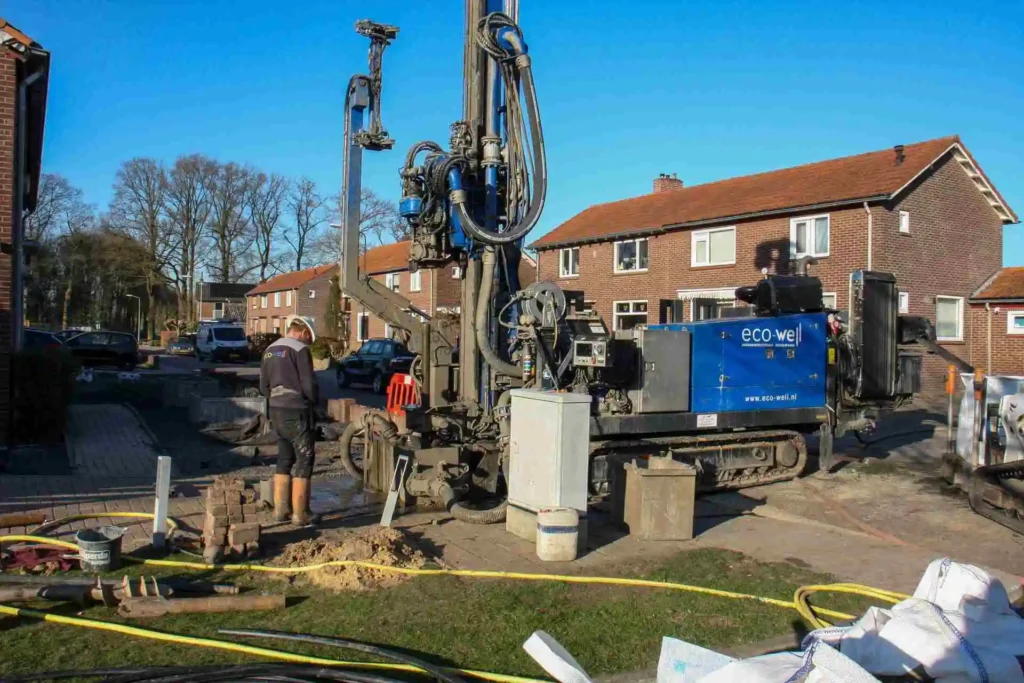
What Drives Well Drilling Cost: 6 Real Factors
Most homeowners focus on the per-foot price. That matters, but five other factors often add more to your final bill than the drilling charge alone.
1. Well Depth: The Biggest Variable
Every foot you drill costs money, and you pay whether or not water is found at the depth your driller expects. This is the part that surprises most people. According to NGWA contractor surveys, the single biggest variable in any well project is depth, and depth cannot be confirmed until drilling begins.
Most residential water wells fall between 100 and 300 feet deep. In Rhode Island, Providence County averages closer to 150 to 250 feet because the granite bedrock sits deeper than in coastal Washington County, where wells often reach water at 80 to 150 feet. In western states with lower water tables, drilling 400 to 600 feet is common.
| Well depth | Drilling only | Complete system installed |
|---|---|---|
| 50 feet | $1,000 to $1,500 | $1,500 to $4,000 |
| 100 feet | $2,000 to $3,000 | $3,000 to $8,000 |
| 150 feet | $3,000 to $4,500 | $4,500 to $12,000 |
| 200 feet | $4,000 to $6,000 | $6,000 to $16,000 |
| 300 feet | $6,000 to $9,000 | $9,000 to $24,000 |
| 400 feet | $8,000 to $12,000 | $12,000 to $32,000 |
Source: HomeGuide Well Drilling Cost Guide 2026, Angi Project Data
2. Geology and Soil Type
Drilling through soft soil or sand costs around $15 to $25 per foot. Clay or loam sits in the $20 to $35 range. Once a drill bit hits soft rock or shale, that climbs to $30 to $50 per foot. Hard granite bedrock, which covers much of Rhode Island, Connecticut, and Massachusetts, pushes the rate to $45 to $85 per foot because equipment works harder and wears faster.
This is the single biggest reason New England well costs run above the national average. The glacial till and granite underlying most of Rhode Island means more drilling time, more equipment wear, and more fuel per foot drilled. When a contractor quotes you a per-foot rate, always ask what soil type that rate assumes and what happens to your price if they hit harder material at depth.
3. Well Type: Drilled, Dug, or Driven Point
A drilled well is what most people mean when they talk about drilling a well. A rotary or cable tool rig bores down 100 to 300 feet or more to reach a reliable aquifer. This is the standard for residential water supply in Rhode Island and throughout the Northeast.
Dug wells are older technology. They go 25 to 50 feet deep and work only where the water table is very close to the surface. These were common on older New England properties but are no longer installed on new construction in most states. They are also more vulnerable to surface contamination because they sit in the shallow aquifer zone where bacteria, nitrates from septic systems, and runoff contaminants can enter.
Driven point wells work in sandy soil only and max out around 50 feet. They are used mostly for irrigation, not drinking water. Geothermal wells are a separate category entirely, used for heat exchange rather than water supply.
| Well type | Cost per foot | Total cost range | Typical depth |
|---|---|---|---|
| Drilled residential | $30 to $80+ | $3,000 to $24,000+ | 100 to 300 feet |
| Dug well | $15 to $30 | $1,800 to $3,000 | 25 to 50 feet |
| Driven point | $25 to $40 | $1,200 to $3,000 | Up to 50 feet |
| Irrigation well | $30 to $100+ | $3,000 to $40,000+ | 100 to 400 feet |
| Artesian well | $35 to $90 | $5,300 to $40,500 | 150 to 450 feet |
| Geothermal well | $20 to $40+ | $2,000 to $20,000+ | 100 to 500 feet |
Source: HomeGuide 2026, Angi Cost Data 2026
4. Location and Regional Labor Costs
Well drilling costs vary significantly by state. Mississippi averages around $6,200 for a complete residential system, partly because the water table is shallow at 85 to 100 feet in many areas. Hawaii averages over $45,000 because of volcanic rock, remote access, and high labor costs. California runs $38,500 on average due to deep aquifers and hard rock throughout much of the state.
Rhode Island sits on the higher end of the Northeast range. Budget $8,000 to $18,000 for a complete well system. Connecticut and Massachusetts run similar numbers. New Jersey averages slightly lower at $7,000 to $14,000 because parts of the state have sandier geology. These figures reflect genuine contractor quotes from 2025 and 2026, not national averages applied to the region.
5. Distance from Well to House
Your final bill includes running a water line and electrical wiring from the well to your home. The farther the well sits from your house, the more pipe, conduit, and labor goes into that run. A well 20 feet from your foundation costs far less to connect than one 200 feet across your property. Expect to add $500 to $2,000 or more for longer runs, depending on distance and terrain.
Some properties require directional boring under a driveway or landscaping to run the supply line without tearing up your yard. That adds another $500 to $1,500 depending on the length and obstacles involved.
6. Permits and State Regulations
Rhode Island requires a permit from the Department of Environmental Management (DEM) for any new drilled well. You cannot legally drill without one. Permit fees in RI range from $50 to $200, and your driller typically handles the application as part of the job. Some contractors include the permit in their quote; others list it as a separate line item. Always confirm this upfront.
Connecticut and Massachusetts have similar permit requirements through their respective state environmental agencies. New Jersey requires a well permit through the local health department. If a contractor tells you no permit is needed for a new residential well in any of these states, that is a serious red flag. Licensed contractors know the regulatory requirements for every county they work in.
Full Well System Cost Breakdown: What You Are Actually Paying For
When a contractor quotes you a per-foot price, that often covers drilling and steel casing only. A complete, functioning water well system includes several other components that add real cost. Here is where your money actually goes.
| Component | Cost range | Notes |
|---|---|---|
| Drilling (per foot) | $20 to $65/ft | Main variable, depth and soil dependent |
| Steel well casing | $600 to $2,000 | Depth and diameter dependent |
| PVC well casing | $400 to $1,200 | Common for shallower wells |
| Submersible pump | $800 to $2,000 | Size matches well yield and depth |
| Pressure tank | $500 to $1,500 | Protects pump from short-cycling |
| Electrical wiring | $500 to $1,200 | From pump to pressure tank to house |
| Wellhead / sanitary cap | $100 to $300 | Prevents surface contamination |
| Water quality testing | $100 to $400 | Always recommended on new wells |
| RI state permit | $50 to $200 | Required by law |
| Mobilization / rig transport | $300 to $1,500 | Higher for difficult site access |
| Complete 150 to 200 ft RI system | $8,000 to $18,000 | Realistic all-in range for RI |
Note: These figures reflect contractor pricing data collected in Rhode Island and Massachusetts in 2025 and 2026, not national averages redistributed to the region. Always get three quotes before committing.
One thing most cost guides leave out: the pump and pressure tank are not optional extras. They are part of every functional well water system. A pump without a pressure tank short-cycles and fails prematurely. A pressure tank without a properly sized pump produces inconsistent water pressure. Budget for the full system, not just the hole in the ground.
Well Drilling Costs in Rhode Island and the Northeast
This section covers what no national cost guide can tell you: how Rhode Island geology, regulations, and contractor market conditions affect your actual project cost.
Rhode Island Well Depth by County
Well depth in Rhode Island depends heavily on where your property sits. Washington County properties along the South County coast often hit water at 80 to 150 feet because the coastal plain geology has more sand and gravel deposits. Providence County and Kent County sit on harder granite and glacial till, where 150 to 250 feet is more typical for a productive residential well. Newport County varies significantly depending on whether you are on the island or the mainland.
Before drilling, your licensed driller should pull local well records from the RI DEM well completion database. These public records show the actual depths and yields of completed wells on neighboring properties, giving you a realistic depth estimate before the rig arrives. This step costs nothing and can prevent significant budget surprises.
Why Rhode Island Costs More Than the National Average
Three factors push RI well drilling costs above the national average. First, the granite bedrock that covers much of the state drills slowly and wears equipment faster than soft soil, which increases both time and cost per foot. Second, Rhode Island has some of the higher construction labor costs in the region. Third, RI DEM licensing requirements are strict, and legitimately licensed contractors carry the overhead of training, insurance, and compliance that discount operators skip.
That last point matters. A licensed water well contractor in Rhode Island holds certification from the state and carries general liability and workers’ compensation insurance. If an unlicensed driller causes a contamination event or structural failure, you have no recourse. The $1,000 to $2,000 premium you pay for a licensed contractor is real protection, not a markup.
Connecticut and Massachusetts Comparison
Connecticut well drilling costs run $7,500 to $16,000 for a complete system, similar to Rhode Island. Massachusetts is comparable at $7,000 to $18,000, with higher costs in areas with deep water tables in central and western parts of the state. The South Shore area around Braintree and Quincy, where many properties rely on private wells, typically sees costs of $9,000 to $16,000 for a complete installation.
Hidden Costs Most Homeowners Miss
Every cost guide covers drilling, pump, and casing. These are the ones that catch people off guard.
Dry Holes and Depth Overruns
If your driller estimates water at 150 feet and hits nothing until 220 feet, you pay for all 220 feet of drilling. The estimate is just that: an estimate. Some drillers offer contracts with a cap on how far they will drill at the standard rate before renegotiating, but many contracts are open-ended by depth. Ask specifically: what happens to my price if we go deeper than expected? Get the answer in writing before the rig shows up.
In rare cases, a well site produces no usable water at all. This is uncommon in Rhode Island where the aquifer system is generally reliable, but it does happen on properties with unusual geology. Ask your driller about their experience drilling on similar lots in your area.
Well Abandonment of an Existing Well
If you are replacing an old well on your property, Rhode Island law requires the old well to be properly abandoned and sealed. Abandonment costs $500 to $1,500 depending on depth and condition. This is not optional and cannot be skipped when installing a new well on the same property. Some homeowners find this cost in their contractor’s quote and are surprised by it. Now you will not be.
Water Treatment After Testing
Rhode Island well water commonly contains elevated iron, hardness from calcium and magnesium, and in some areas arsenic from natural bedrock deposits. A basic water test costs $100 to $400 and should be done on every new well before the water is used for drinking. If results show iron, hardness, or arsenic above safe levels, you will need a water filtration system or water softener.
A water softener installation costs $1,200 to $3,800. An iron filter system runs $800 to $2,500. An arsenic treatment system adds another $1,500 to $4,000. None of these show up in your well drilling quote, but they are part of the real cost of putting in a well on properties where water quality issues exist. Do not skip the water test to save $150 and then drink untreated well water for months.
Site Access and Mobilization
A drilling rig is a large piece of equipment. If your property has a narrow driveway, steep slope, or mature trees close to the drill site, mobilization costs go up. Some drillers charge a flat mobilization fee; others build it into the per-foot rate. If access is restricted on your lot, mention this upfront so the contractor can quote accurately rather than adjusting the price after work starts.
How to Reduce Well Drilling Costs Without Cutting Corners
There are real ways to manage the cost of installing a well. There are also ways that look like savings and cause expensive problems later.
Get three quotes from licensed contractors. Not two, three. Pricing varies enough in the RI contractor market that a third quote frequently saves $1,000 to $2,500 on the same scope of work.
Pull the local well log data before contractors arrive. The RI DEM well completion database is publicly searchable. Knowing that your neighbors hit water at 130 to 160 feet gives you a reasonable baseline when evaluating contractor depth estimates.
Ask about seasonal pricing. Some well drillers in New England have slower periods in late fall and early winter when demand drops. A few offer modest rate reductions during off-peak scheduling.
Bundle the full system with one contractor. Coordinating separate contractors for drilling, pump installation, electrical, and plumbing adds cost and scheduling complexity. A driller who handles the full installation typically prices the bundled job more competitively than piecemeal coordination.
Do not skip the water test. A $150 water test that reveals an iron problem saves you from months of stained fixtures, failed appliances, and eventual remediation costs. Testing is not optional for safe drinking water from any private well.
Do not install a smaller pump to save $300. Undersized pumps run constantly, wear faster, and cost more in replacement and electricity over their lifespan than the upfront savings justify.
What to Ask a Licensed Well Driller Before You Sign Anything
These 10 questions separate qualified contractors from those who should not be drilling wells near your home.
- Are you licensed by the Rhode Island Department of Environmental Management or your state water well licensing authority? Can you provide your license number?
- Do you pull the permit, or is that my responsibility? Is the permit fee included in your quote?
- What is your per-foot drilling rate and exactly what does it include? Casing, grouting, development?
- What soil type does your per-foot rate assume? What happens to my price if you hit granite or hard rock?
- What is your mobilization charge? Is it included in the per-foot rate or listed separately?
- Does your quote include pump, pressure tank, and electrical connection, or drilling only?
- What casing material do you use? Steel or PVC? What diameter?
- Do you guarantee a minimum yield in gallons per minute? What is your minimum acceptable yield for a residential well?
- What warranty do you offer on parts and labor? What happens if the pump fails in the first year?
- Can you provide references from jobs completed in this county in the past 12 months?
Any licensed water well contractor should answer all 10 of these questions without hesitation. Vague answers on the permit, the per-foot scope, or the yield guarantee are warnings worth paying attention to before you hand over a deposit.
Is Drilling a Well Worth the Cost?
Whether a private well makes financial sense depends on your specific situation. Municipal water eliminates drilling costs entirely and typically includes reliable pressure, regular testing, and infrastructure maintenance. But it also comes with monthly bills, usage restrictions, and in some Rhode Island communities, water that carries a taste or smell from treatment chemicals.
A properly drilled and maintained private well can last 30 to 50 years before major infrastructure replacement is needed. The well pump typically needs replacement every 10 to 15 years at a cost of $800 to $2,500. Annual water testing runs $100 to $400. Annual pressure tank inspection and pump checks cost $100 to $200 if you hire a professional.
For properties not currently on municipal water, a private well is often the only practical option. For rural land, agricultural use, or irrigation wells on larger properties, the math almost always favors drilling over municipal hookup costs where that option even exists.
One honest note: if your existing well still produces clean water at adequate yield, the least expensive option is maintaining it rather than drilling new. Old does not mean bad. A well that has served a home reliably for 40 years may need a pump replacement, not full replacement.
Frequently Asked Questions
How much does it cost to drill a water well?
Drilling a residential water well costs $3,000 to $15,000 on average nationally for a complete installation. In Rhode Island and New England, budget $8,000 to $18,000 due to granite geology and higher labor costs. Per-foot drilling rates range from $20 to $30 for drilling only, or $30 to $80+ for a complete system installed. (Source: NGWA 2026, HomeAdvisor, Angi)
What is well boring and how does it compare to drilling?
Well boring and well drilling refer to the same process in most contexts. Boring technically describes the rotary method of advancing a borehole, while drilling can refer to any method including cable tool, air rotary, or mud rotary. The terms are used interchangeably by most homeowners and contractors. Well boring cost matches well drilling cost: $25 to $65 per foot for residential projects.
How much does it cost to dig a well versus drill a well?
Digging a well refers to hand or backhoe excavation to 25 to 50 feet, used only where the water table is very shallow. The cost of digging a well runs $1,800 to $3,000. Drilling goes far deeper and costs $3,000 to $24,000+ depending on depth. In Rhode Island, digging a well is not practical for most properties because the water table sits too deep for dug well construction.
How long does it take to drill a well?
A typical residential well takes one to three days to drill, depending on depth and geology. The complete installation including pump, pressure tank, electrical, and water testing takes around 7 to 10 days total. Hard granite bedrock extends the drilling phase. Weather and permit processing can add time to the overall project timeline.
How deep does a water well need to be in Rhode Island?
Most Rhode Island residential wells are drilled 100 to 250 feet deep. Washington County coastal properties often reach water at 80 to 150 feet. Providence and Kent County properties on harder granite typically require 150 to 250 feet. Your driller should review local well completion records from the RI DEM database before estimating depth for your specific location.
Do I need a permit to drill a well in Rhode Island?
Yes. Rhode Island requires a permit from the Department of Environmental Management for any new drilled residential well. Your licensed water well contractor handles the permit application as part of the job. Permit fees run $50 to $200. Drilling without a permit is illegal and creates liability issues for the property owner.
How much does it cost to put in a well on raw land?
Installing a well on undeveloped land adds site access and mobilization costs to the standard drilling price. Budget the standard $8,000 to $18,000 for RI residential wells plus $500 to $2,000 for site work if access is limited. If the land lacks electrical service, adding a power connection to the wellhead adds $1,500 to $4,000 depending on distance from the nearest utility connection.
What is the cheapest type of well to install?
Shallow dug wells costing $1,800 to $3,000 are technically the cheapest, but they only work where the water table is 25 to 50 feet from the surface and are vulnerable to contamination. For safe drinking water on most Rhode Island properties, a drilled well reaching the deep aquifer is the appropriate choice. Drilling shallower than the water table requires leads to pump problems and water quality issues that cost far more to fix than the initial savings.
How often does a well pump need to be replaced?
Submersible well pumps typically last 10 to 15 years with proper maintenance. Pump replacement costs $800 to $2,500 depending on depth and pump size. Regular annual inspections catch early wear, pressure drop, or electrical issues before a full failure occurs. A pressure tank that is not maintained causes the pump to short-cycle and fail years earlier than it should.
Can well water contain contaminants?
Yes. Private well water is not treated or tested by any municipal authority. Rhode Island well water commonly carries elevated iron, hardness from calcium and magnesium, and in some areas arsenic from natural granite deposits. The EPA recommends testing private well water at least once a year for bacteria and nitrates, and whenever you notice changes in taste, smell, or color. A certified water testing lab can screen for the full range of contaminants relevant to your area.
What is the difference between a private well and city water?
City water comes from a public supply system, is treated and tested on a regular schedule, and arrives at your tap through infrastructure maintained by your municipality. You pay a monthly water bill and have no control over the source or treatment. A private well draws from the groundwater aquifer beneath your property. You own the system, pay no monthly supply bill, and are responsible for testing and maintaining water quality yourself. Neither option is automatically better. The right choice depends on your location, property type, and water needs.
Sources and References
- National Ground Water Association (NGWA). Industry Surveys and Well Owner Resources. ngwa.org. Accessed June 2026.
- HomeGuide. How Much Does Well Drilling Cost? 2026. homeguide.com/costs/well-drilling-cost
- Angi. How Much Does Well Drilling Cost? 2026. angi.com/articles/how-much-does-well-drilling-cost.htm
- HomeAdvisor. Cost to Drill a Well. Updated January 2026. homeadvisor.com/cost/landscape/drill-a-well
- Epp Well Solutions. Water Well Drilling Costs in 2026. eppwellsolutions.com/blog/well-drilling-costs-in-2025
- Rhode Island Department of Environmental Management. Well Permitting and Groundwater Resources. dem.ri.gov
- U.S. Environmental Protection Agency. Private Drinking Water Wells. epa.gov/privatewells